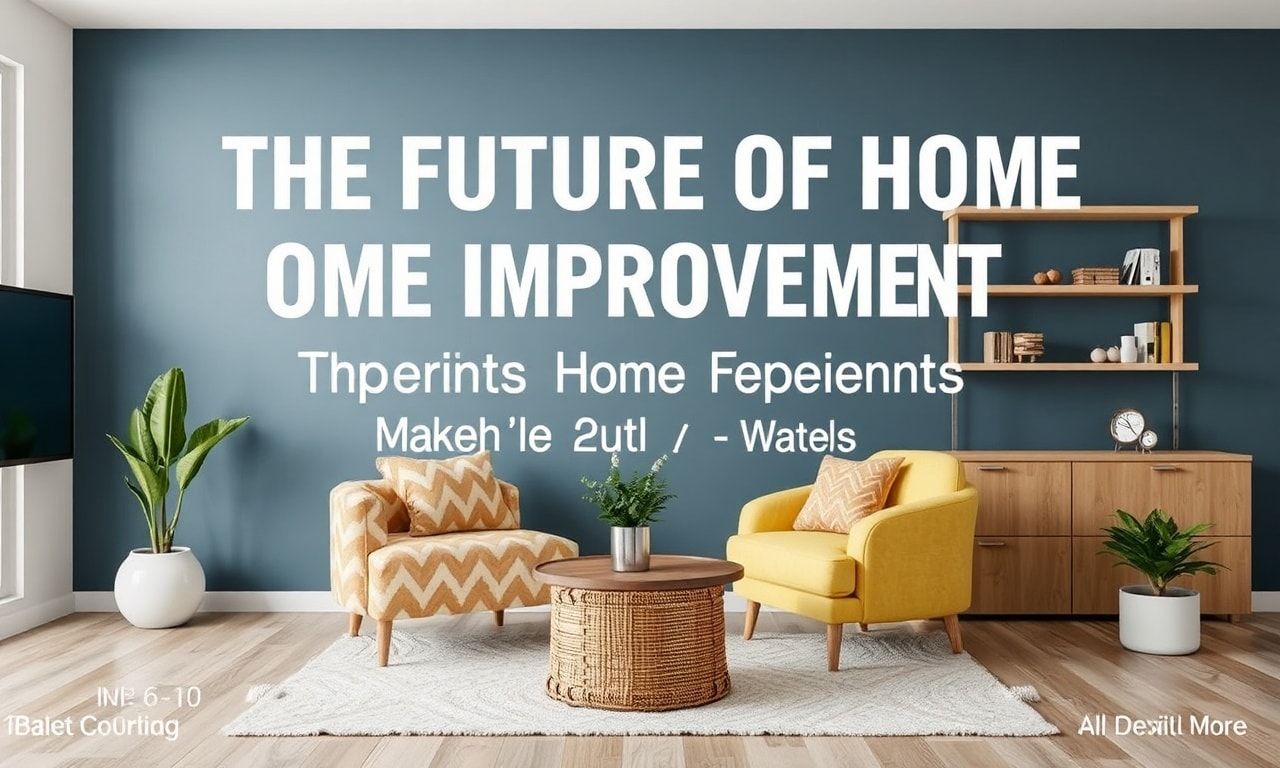
The Evolution of Home Improvement
The home improvement industry has seen significant shifts over the past decade, driven by technological advancements, changing consumer preferences, and a growing emphasis on sustainability. As we look ahead to 2026, several key trends are expected to shape the future of home improvement, influencing everything from design aesthetics to the tools and materials used in construction and renovation projects.
Technological Innovations
One of the most notable trends in home improvement is the integration of smart technology. Homeowners are increasingly investing in smart home systems that allow them to control lighting, temperature, security, and appliances through their smartphones or voice assistants. This trend is expected to continue, with even more advanced and interconnected systems becoming available. Additionally, the use of virtual reality (VR) and augmented reality (AR) in home design and renovation is on the rise, allowing homeowners to visualize changes before they are implemented.
The Rise of Sustainable Materials
Sustainability is another major focus in the home improvement industry. Consumers are becoming more environmentally conscious and are seeking out eco-friendly materials and practices. This includes the use of recycled and renewable materials, energy-efficient appliances, and water-saving fixtures. The demand for sustainable homes is driving innovation in green building materials and techniques, making it easier for homeowners to reduce their carbon footprint while enhancing the value of their properties.
Expert Insights and Predictions
To stay informed about the latest trends and innovations in home improvement, it’s essential to follow the insights of industry experts. According to the top home improvement experts to follow in 2026, several key predictions include the continued growth of modular and prefabricated housing, the increasing popularity of minimalist and multifunctional design, and the integration of health and wellness features into home design. These experts also emphasize the importance of staying updated with the latest tools and technologies to ensure high-quality and efficient home improvement projects.
Key Trends to Watch
Some of the key trends to watch in the coming years include:
- Smart Home Integration: The seamless integration of smart home technologies will continue to be a priority for homeowners, with a focus on interoperability and user-friendly interfaces.
- Sustainable and Eco-Friendly Practices: The use of sustainable materials and energy-efficient solutions will become standard in home improvement projects.
- Health and Wellness Features: Homeowners are increasingly prioritizing features that promote health and well-being, such as air purification systems, ergonomic design, and natural lighting.
- Modular and Prefabricated Housing: The demand for modular and prefabricated homes is expected to grow, offering cost-effective and efficient solutions for homeowners.
- Minimalist and Multifunctional Design: The trend towards minimalist and multifunctional design will continue, with a focus on maximizing space and functionality.
The Impact of Economic Factors
The home improvement industry is also influenced by economic factors, including interest rates, housing market trends, and consumer spending. As the economy evolves, homeowners may prioritize different aspects of home improvement, such as cost-saving measures or high-end upgrades. Staying informed about economic trends and their potential impact on the industry is crucial for both homeowners and professionals in the field.
Conclusion
As we look ahead to 2026, the home improvement industry is poised for significant growth and innovation. By staying informed about the latest trends and following the insights of industry experts, homeowners can make informed decisions about their home improvement projects. Whether it’s integrating smart technology, adopting sustainable practices, or prioritizing health and wellness features, the future of home improvement is bright and full of exciting possibilities.
As cities worldwide grapple with health challenges, Shanghai’s wellness initiatives offer lessons in urban health management.
In the midst of today’s fast-paced world, understanding the balance between self-care and productivity is crucial; our latest feature, modern women’s dual priorities, delves into this pressing issue.
In the fast-paced world of modern journalism, managing your time effectively is crucial; our comprehensive time management guide offers practical advice to help you stay ahead.