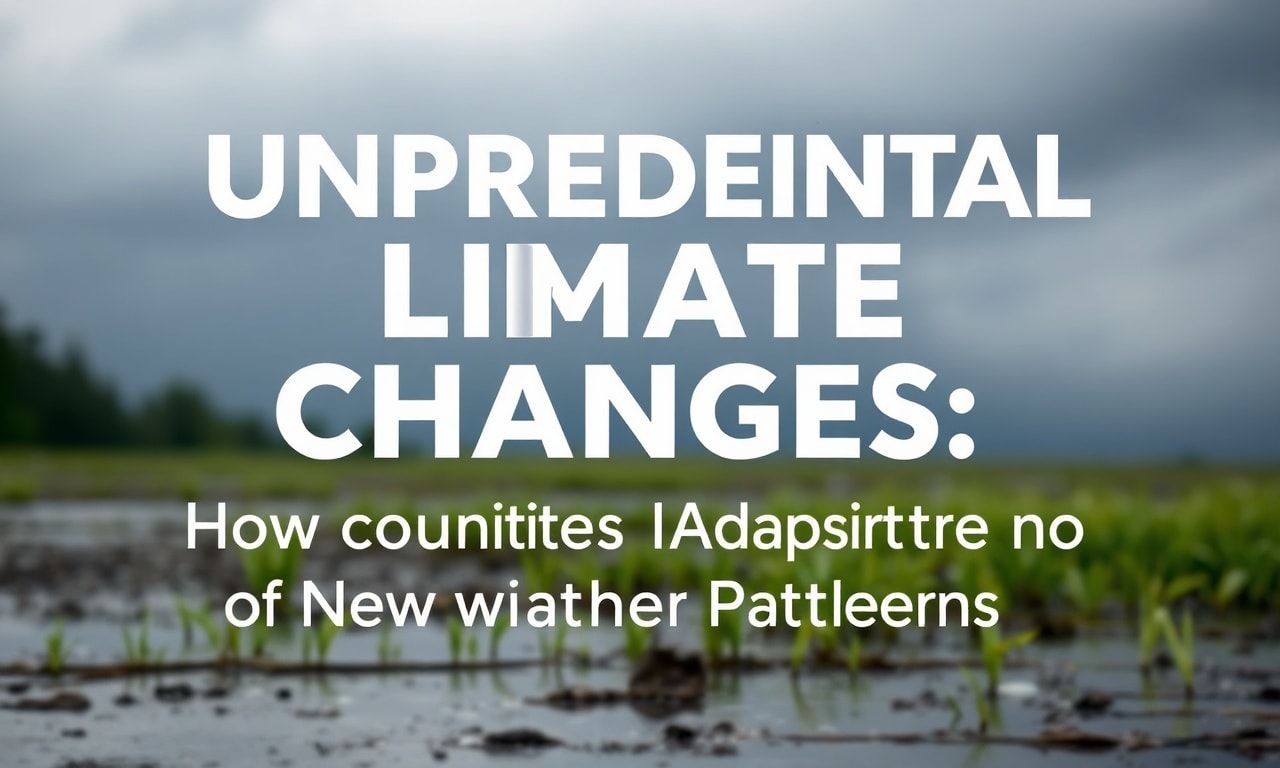
The New Normal: Understanding Recent Climate Changes
The world is witnessing a rapid shift in weather patterns, with unprecedented climate changes affecting communities globally. Scientists attribute these changes to a combination of natural variability and human-induced factors, primarily greenhouse gas emissions. The consequences are far-reaching, from more frequent and intense heatwaves to erratic rainfall patterns and severe storms. Understanding these changes is crucial for communities to adapt and mitigate the impacts effectively.
Impact on Agriculture and Food Security
Agriculture, a sector highly dependent on weather conditions, is one of the most affected by these climate shifts. Farmers are facing challenges such as unpredictable growing seasons, water scarcity, and increased pest outbreaks. These issues threaten food security and the livelihoods of millions of people worldwide. Governments and international organizations are stepping up efforts to support farmers through climate-resilient practices and technologies. Initiatives include developing drought-resistant crop varieties and implementing advanced irrigation systems.
Urban Planning and Infrastructure Resilience
Cities are also grappling with the effects of changing weather patterns. Urban planners are focusing on building resilient infrastructure to withstand extreme weather events. This includes enhancing drainage systems to prevent flooding, reinforcing buildings to withstand stronger storms, and creating green spaces to mitigate the urban heat island effect. Additionally, cities are investing in early warning systems to alert residents of impending weather forecast today, allowing for timely evacuations and preparations.
Case Study: Miami’s Adaptation Strategies
Miami, a city highly vulnerable to rising sea levels and hurricanes, has implemented several adaptation strategies. The city has raised roads and installed pumps to combat flooding. It has also updated building codes to ensure new constructions can withstand stronger storms. Miami’s efforts serve as a model for other coastal cities facing similar challenges.
Health Implications and Public Health Responses
The health sector is also feeling the impacts of climate change. Increased temperatures can lead to heat-related illnesses, while changes in precipitation patterns can exacerbate the spread of waterborne diseases. Public health officials are working to enhance surveillance systems and improve healthcare infrastructure to cope with these challenges. Community education programs are being launched to inform the public about preventive measures and early warning signs of climate-related health issues.
Global Cooperation and Policy Initiatives
Addressing climate change requires global cooperation and coordinated policy initiatives. International agreements like the Paris Agreement aim to unite countries in their efforts to reduce greenhouse gas emissions and adapt to climate impacts. However, the effectiveness of these agreements depends on the commitment and actions of individual nations. Developing countries, often the most vulnerable to climate change, require financial and technical support from the international community to build resilience and adapt to new weather patterns.
Innovative Solutions and Technological Advancements
Innovation and technology play a crucial role in adapting to climate change. Researchers are developing new technologies to monitor weather patterns more accurately and predict extreme weather events. For instance, advanced satellite systems and AI-driven models are being used to improve weather forecasting and provide timely alerts. Additionally, renewable energy technologies are being deployed to reduce reliance on fossil fuels and lower carbon emissions.
Community Engagement and Education
Community engagement and education are vital for successful adaptation to climate change. Local communities must be informed about the risks and equipped with the knowledge and tools to prepare for and respond to weather-related events. Grassroots initiatives, such as community-based disaster risk management programs, are essential in building resilience at the local level. Schools and universities are also incorporating climate change education into their curricula to raise awareness and foster a culture of preparedness.
Conclusion
The rapid changes in weather patterns present significant challenges, but they also offer opportunities for innovation and collaboration. By understanding the impacts of climate change and implementing adaptive strategies, communities can build resilience and mitigate the effects of extreme weather events. Global cooperation, technological advancements, and community engagement are key to navigating this new normal and ensuring a sustainable future for all.
As we navigate through 2023, managing personal finances has become more crucial than ever, and smart financial strategies for this year offers practical advice to help you stay ahead.
In today’s fast-paced digital world, staying entertained on the go is essential; discover how with downloading entertainment content easily.
To stay informed about the latest happenings, consider reviewing Turkey’s breaking news updates for a comprehensive overview of current events.